Only finished first chapter about 1521 Cortes conquest of Mexico City, then named Tenochtitlan from Mexica with aid from local tribes
Sunday, January 18, 2026


Saturday, January 17, 2026
Book Review: Kicking The Hornet's Nest, US Foreign Policy In The Middle East From Truman To Trump by Daniel E. Zoughbie

Saturday, January 10, 2026
Book Review: Rope, How a Bundle of Twisted Fibers Became the Backbone of the Civilization by Tim Queeney
An interesting book about history of rope with a lot of anecdotes, worth a weekend afternoon to flop through for some leisure fun.

Thursday, January 08, 2026
Book Review: The fractured Age, How the Return of Geopolitics Will Sprinter the Global Economy by Neil Shearing
The book is the best I have read in deciphering splinting of the globalization after Donald Trump's 2nd term. It analyzed why, how and what will come after the ending of hyper globalization and gave logic prediction what lies ahead in 20240 for the world

Trilemma of monetary policy by John Fleming and Robert Mundell
The country cannot have all three of the policies
- full and complete openness to global capital flows
- a fixed exchange rate; and
- independent monetary polices geared toward domestic objectives
This is the theoretical basis for Bretton Woods system
Wednesday, January 07, 2026
Raising Children
"究竟什么是富养,每个人的理解却不同。 我觉得,让孩子拥有宽松的家庭环境,自由的成长空间,和善良正直,通情达理,情绪稳定的父母,才是最实实在在的富养。"
https://bbs.wenxuecity.com/bbs/znjy/7722053.html
Friday, December 26, 2025
Book Review: The Land Trap, A New History of The World's Oldest Asset By Mike Bird

With protracted downturn in China's housing market, a common phrase is often quoted as "The housing market abducts Chinese economy".
As this book meticulously detailed, that phrase can also be applied to 80's Japanese housing market, Hong Kong's two hundred plus years policy of using land to finance government functioning, US's reliance on land financing to bootstrap colonial economy, and 2008's housing bubble in US. One exception is Singapore, who manages to provide a semi-market driven and rising housing market without economy being kidnapped by the housing market at the expense of other productive industries such as manufacturing and service.
Along the way, the book introduces some of the critical thinkers in land and housing policies, Henry George and his Progress and poverty, Wolf Ladejinsky and his land reform in post second war Japan, Korea and Taiwan
Correlate to this book, it seems the land price will either flatline or fall in fractured world where capital flow will be more intra-bloc and less inter-bloc.
Wednesday, May 07, 2025
Book review: In War and Famine, Missionaries in China's Honan Province in the 1940s by Erleen J. Christensen
A memoir by a missionary's daughter on her father (a missionary doctor in Henan province) and missionaries in Henan during 1940's Japanese occuputions of Henan. There is a small part that told the work of OSS (a precursor to CIA) in Henan Tantouchen. One of my neighbor's father was in the book as a OSS radio communicator.
Thursday, May 01, 2025
Book Review: Bad samaritans, The myth of free trade and the secret history of capitalism by Ha-joon Chang
Since Reagon and Thatcher TINA (there is no alternative), neo-liberalism aka free-market free-trade economics have been a role model for decades, and the rightousness of neo-liberalism is further fanned by academics like Frances Fukuyama and writer like Thomas Friedman. But silver bullet neo-liberalism doesn't yield results it promised in developing countries adopting it, most of the initiatives World Bank/IMF/WTO implemented in developing countries didn't promote growth and economic prosperity. Instead countries like Japan, Korea and China who adopted policies that counter neo-liberalism actually produce sustainable growth.
This book is a look at globalization and neo-liberalism from the viewpoints of the developing(poor) countries rather that of developed(rich) nations , where infant industries protection are at odds with WTO/World Bank/IMF mandates on free trade and free market. A much naunced look at how China achieve the sustainable growth can be seen with Lin Yifu's https://www.youtube.com/watch?v=9g6noa-Zgbo&t=868s, which is a viewpoint from China.
A debunking of Thomas Friedman's The Lexus and the olive tree
Re-discovering Daniel Defoe's A Plan for English Commerce, a long lost treatise on true reasons UK became world dominant manufacturing power, not by free trade and free market, but by selective protectionism and high tariff
Neo-liberalism = Free trade and free market, Adam Smith
Civil war was a battle between Southern free-trade/low tariff slave owner vs Northern protectionist of infant industry/high tariff industrialist
"Despite being the most protectionist country in the world throughout the 19th century and right up to the 1920s, the US was also the fastest growing economy
Countries cited in the book: Britian, US, Singapore, Korea, Japan, Finland
So Trumpism may get a point on raising tariff.
Problems with SOE: Principal-Agent problem+Free-rider problem+Soft budget constraint
Success stories of SOE: Singapore airline, Korean's POSCO
allocative deadweight loss
Friday, March 28, 2025
Quotes
"First they came for the Socialists, and I did not speak out— Because I was not a Socialist. Then they came for the Trade Unionists, and I did not speak out— Because I was not a Trade Unionist. Then they came for the Jews, and I did not speak out— Because I was not a Jew. Then they came for me—and there was no one left to speak for me." -- Martin Niemöller
Wednesday, October 23, 2024
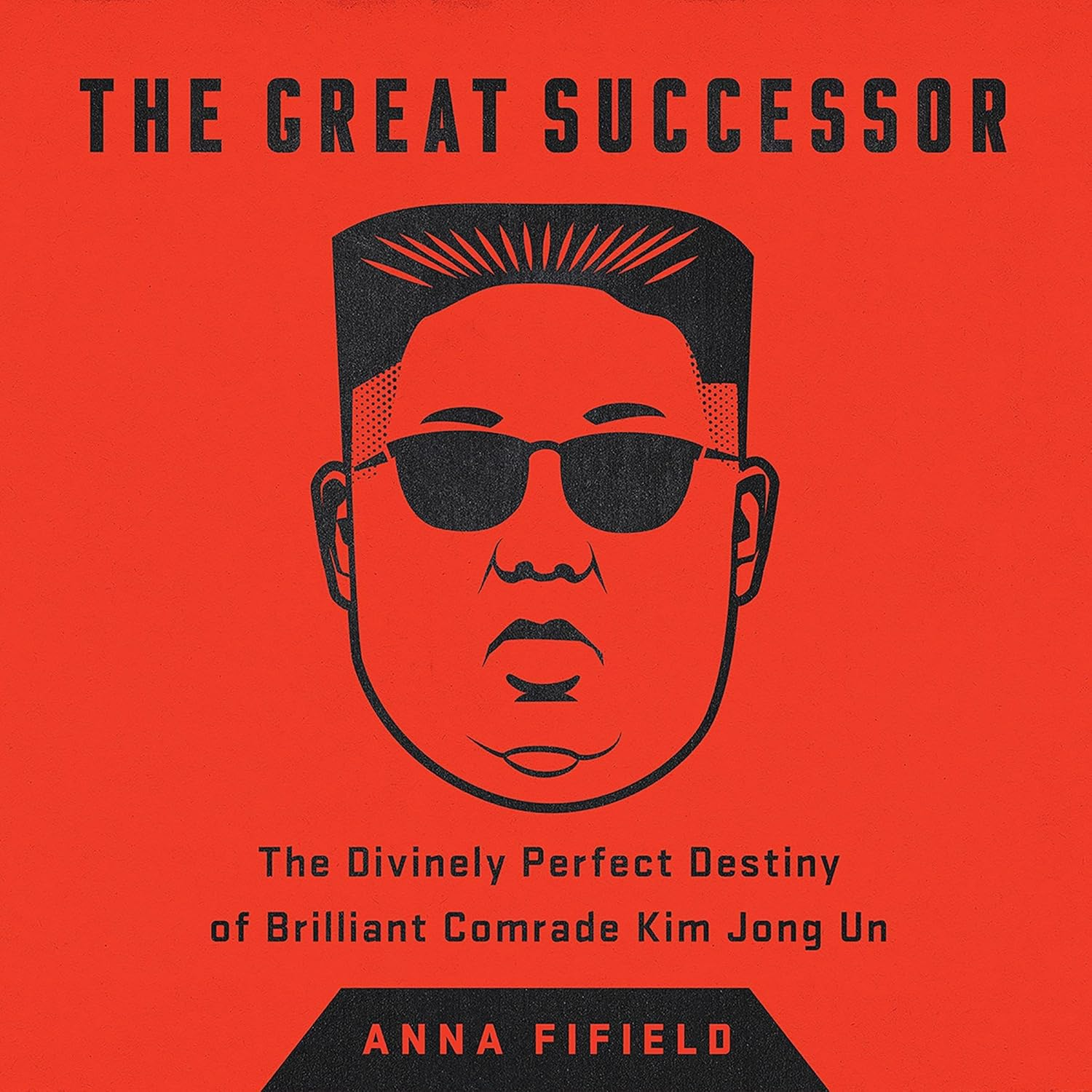
Book Review: The Great Successor: The Divinely Perfect Destiny of Brilliant Comrade Kim Jong Un by Anna Fifield
Tuesday, October 22, 2024
中国经济现在的问题不过是历史的重复
“90 年代中期之后,困扰中国经济的一个突出问题是所谓的内需不足。这尤
其体现在消费需求的不足上。这个严重困扰延续的时间是如此之长,以至于“提
振内需”变成了各级政府官员常年挂在嘴边的一个政治口号。那么,在国民财富
增长“一支独秀”的同时,中国内部的消费意愿以及消费能力为什么反而会变得
如此低下呢?对这个问题,许多人都从不同的角度给出了自己的解释,但“有消
费能力的缺乏消费意愿,有消费意愿的却缺乏消费能力”恐怕是对这个悖论最有
说服力的解释。显然,这个事实所透露出的信息已经远远不像“内需不足”这个
术语那么中性了。这实际上在暗示,中国社会经过25 年的改革,已经出现严重
的分配失衡。而这种失衡的持续之长及扩展之快都显示,中国的分配模式已经在
相当高的可能性被锁定,一个久别了的词汇——马太效应,正在回到中国人的生
活当中。当然,在中国改革过程中所出现的“马太效应”被注入了典型中国式的
内涵:被权力为分配轴心的模式不是将少数人,而是将大多数人趋入贫困的深渊。”
-- 《中国:奇迹的黄昏》袁剑 著 2008年
Wednesday, January 10, 2024
Heilmeier's Catechism
A set of questions credited to Heilmeier that anyone proposiing a research project or product development effort should be able to answer
- What are you trying to do? Articulate your objectives using absolutely no JARGON
- How is done today? And what are the limits of current practice?
- What is new in your approach and why do you think it will be successful?
- Who cares?
- If you are successful, what difference will it make?
- What are the risks and the payoffs?
- How much will it cost?
- How long will it take?
- What are the midterm and final "exams" to check for success?
Sunday, January 07, 2024
Book Review: The other great game, The opening of Korea and the birth of modern east Asia by Sheila Miyoshi Jager
I was born in Harbin of a Korean Chinese parents. I grew up with an identity confusion, I felt as a North Eastern Chinese, I have hard time relate to all adjectives applied to China in my geography and history classes: long history, diverse ethnicity, and grand vision. Northeastern China is backwater of the China we were introduced in our text books. The north eastern China we grew up with is a flat and fertile land with not much of history and only several ethnics, mainly Han Chinese (a lot of them migrants from inlands in search of food and security) and some Korean like myself and some Japanese descendants left behind after Sino Japanese war, and in the city where I grew up occasional Russian descendants (LaoMaoZi). And we northeasterners are like by-standers, always standing on the sidelines envying all the exciting things happened in the Real China. Chinese living in Manchuria feels like they live on the edge of mainstream Chinese culture. And as a Korean ethnics, I don't feel related to either North Korean or South Korean either. Even food we Korean Chinese prefer are different to what South Koreans like. The staple Korean dish of cold noodle soup, we Korean Chinese like to eat with Wasabi plus chilli and South Korean like to eat with a slice of apple and sweet sour soup. Korean living in Manchuria feel like they live on the edge of mainstream Korean culture.
People live in Manchuria and northeastern China look at the surrounding regions with a slight different perspective and viewpoint than their peers living inside Shanhaiguan.
This book is the first book I read that look at the world from Manchuria and Korean perspective. It framed the Korean Peninsula and Manchuria in the context of geopolitical tension between China, Japan, Russia and to the lesser extent USA. Sino Chinese war, Russia Japanese war and trans Siberia railroad were all covered from the perspective of Korean and Manchuria. It also framed the region in the context of Russian ambitions in gaining a seaport in Pacific, the Japanese dilemma of maritime strategy or continental strategy.
Apple TV series Pachinko also share similar viewpoint, looking at the history from a Korean Japanese minority.
Sunday, September 10, 2023
Book Review: Why Nation Fail, the origin of power, prosperity, and poverty by Daron Acemoglu & James A. Robinson
- Preface Why Egyptians filled Tahrir Square to bring down Hosni Mubarak and what it means for our understanding of the causes of prosperity and poverty
- 1. So close and yet so different, Nogales, Arizona, and Nogales, Sonora, have the same people, culture, and geography. Why is one rich and one poor?
- The economics of the Rio Grande
- The founding of Buenos Aires
- From Cajamarca ...
- .... to Jamestown
- A tale of two constitutions
- Having an idea, starting a firm, and getting a loan
- Path-dependent change
- Making a billion or two
- Toward a theory of world inequality
- 2. Theories that don't work, poor countries are poor not because of their geographies or cultures, or because their leaders do not know which policies will enrich their citizens
- The lay of the land
- The geography hypothesis
- The culture hypothesis
- The ignorance hypothesis
- 3. The making of prosperity and poverty, how prosperity and poverty are determined by the incentives created by institutions, and how politics determines what institutions a nation has
- The economics of the 38th parallel
- Extractive and inclusive economic institutions
- Engines of prosperity
- Extractive and inclusive political institutions
- Why not always choose prosperity?
- The long agony of the Congo
- Growth under extractive political institutions
- 4. Small differences and critical junctures: the weight of history, how institutions change through political conflict and how the past shapes the present
- The world the plague created
- The making of inclusive institutions
- Small difference that matter
- The contigent path of history
- Understanding lay of the land
- 5. "I've seen the future, and it works": Growth under extractive institutions, what Stalin, King Shyaam, the Neolithic Revolution, and the Maya city-states all had in common and how this explains why China's current economic growth cannot last
- I've seen the future
- On the banks of the Kasai
- The long summer
- The unstable extraction
- What goes wrong?
- 6.Difting apart, how institutions evolve over time, often slowly difting apart
- How Venice became a museum
- Roman virtues...
- ... Roman vices
- No one writes from Vindolanda
- Diverging paths
- Consequencess of early growth
- 7.The turning point, how a political revolution in 1688 changed institutions in England and led to the Industrial Revolution
- Trouble with stockings, William Lee's stocking knitting Tmachine
- The glorious revolution
- The industrial revolution
- Why in England
- 8. Not on our turf: barriers to development, why the politically powerful in many nations opposed the industrial revolution
- No printing allowed
- A small difference that mattered, Spain vs England
- Fear of industry, Habsburg empire
- No shipping allowed, Ming and Qing dynasties in China
- The absolutism of Prester John, Ehiopia
- The children of samaale, Somalia
- 9.Reversing developmen, how European colonialism impoverished large parts of the world
- Spice and genocide, Southeast Asia
- The all-to-usual institution, Slave trade and slavery
- Making dual economy. South Africa
- Development reversed
- 10 The diffusion of prosperity, how some parts of the world took different paths to prosperity from that of Britain
- Hornor among thieves, Australia
- Breaking the barriers: The French revolution
- Exporting the revolution, Europe
- Seeking modernity, Japan
- Roots of world inequality
- 11. The virtuous circle, how institutions that encourage prosperity create positive feedback loops that prevent the efforts by elites to undermine them
- The black act ,UK
- The slow march of democracy, UK
- Busting trusts, USA
- Packing the court, FDR in USA
- Positive feedback and virtuous circles
- 12. The vicious circle, How institutions that create poverty generate negative feedback loops and endure
- You can't take the train to Bo anymore Sierra Leone
- From Encomienda to land grab Guatemala
- From slavery to Jim Crow US South
- The iron law of Oligarchy Ethiopia
- Negative feeback and vicious circles
- 13. Why nations fail today, institutions, institutions, institutions
- How to win the lottery in Zimbabwe
- A children's crusade? Siere Leone and sub-Sahara Africa's child soldiers
- Who is the state? Colombia
- El Corralito, Argentina
- The new absolutism, North Korea
- King cotton, Uzbekistan
- Keeping the playing field at an angle, Egypt
- Why nations fail
- 14. Breaking the mold, how a few countries changed their economic trajectory by changing their institution
- Three African Chiefs, Botswana
- The end of the southern extraction, US
- Rebirth in China, China under Deng
- 15. Understanding prosperity and povery, how the world could have been different and how understanding this can explain why most attempts to combat poverty have failed
- Historical Origins
- The irresistible charm of authoritarian growth
- You can't engineer prosperity
- The failure of foreign aid
- Empowerment
Tuesday, August 08, 2023
Chinese economy: It is structural issue, stupid!
Export decline (Geopolitical tension +misstep in diplomacy) and consumption slump(due to China's authoritarian driven and cronysm economy)
=>
GDP growth slowdonw (China needs to maintain 6%+ growth to create jobs)
=>
Youth unemployment rise
Sunday, July 16, 2023
Book Review: The New China Playbook, Beyond Socialism and Capitalism By Keyu Jin
A book from a China raised scholar who is currently living in London. Her viewpoint would be a gentle introduction to westerners deeply ingrained in Western thinking, the way to look at new China from Chinese perspective. [updated 10/21/2024] She thought an extractive political system(One party rule and authoratarian system) such as China has won't hinder China's ecnomic uprising, as long as China maintains an inclusive ecnomic system.
A little light in academic, greatly enlived by interjecting her own upbringing and life experience.
[Updated on 10/21/2024] Newly minted Nobel Economy Prize winner Daron Acemoglu and Simon Johnson in their book Why Nations Fail had predicted an extractive political system will undermine ecnomic development.
Sunday, June 11, 2023
Book review: Crying in H Mart by Michelle Zuner
- Notable quotes from the book
My mother had struggled to understand me just as I struggled to understand her. Thrown as we were on opposite sides of a fault line-generational, cultural, linguistic-we wandered lost without a reference point, each of us unintelligible to the other's expectations.I remembered these things clearly because that was how my mother loved you, not through white lies and constant verbal affirmation, but in subtle observations of what brought you joy, pocketed away to make you feel comforted and cared for without even realizing it. She remembered if you liked your stews with extra broth, if you were sensitive to spice, if you hated tomatoes, if you didn't eat seafood, if you have a large appetite. She remembered which banchan side dish you emptied first so the next time you were over it'd be set with a heaping double portion, served alongside the various other preferences that made you, you.
"Stop crying! Save your tears for when your mother dies。” This was a common proverb in my household. In place of the English idioms my mother never learned, she coined a few of her own. "Mommy is the only one who will tell you the truth, because Mommy is the only one who ever truely love you." Some of the earliest memories I can recall are of my mother instructing me to always "save ten percent of yourself." What she meant was that, no matter how much you thought you loved someone, or thought they loved you, you never gave all of yourself. Save 10 percent, always, so there was something to fall back on. "Even from Daddy, I save," she would add.
....She felt Americans were overly cautions and overly medicated and had instilled this belief in me from a young age, so much so that when Peter got food poisoning from a bad can of tuna and his mother suggested I take him to urgent care, I actually had to stifle a laugh. In my household, there was nothing to do for food poisoning except threw it up. Food poisoning was a rite of passage. You couldn't expect to eat well without taking a few risks, and we suffered the consequences twice a year.
Thursday, January 19, 2023
Book Review: The death of money, The coming collapse of the international monetary system by James Rcikards
- Money illusion : The lag of comprehension of inflation by central bank. It is an opportunity for bankers and smart investors to capture the wealth while general public are left with devalued savings and pensions.
- Question: How does investor achieve this?
- Possible causes for dollar collapse and global financial system collapse outlined in the introduction chapter:
- Financial war
- Inflation
- Deflation
- Chapter 1 Prophesy
- john mulheren
- allen m. poteshman
- signal amplication
- randy tauss
- steve levitt
- dave davos nolan
- red teaming
- chris ray
- lenny raymond
- mike morell
- Chapter 2 The war god's face
- Mirror imaging
- Andy Marshall
- Chapter 3 Ruin of the market
- Adam Smith, The theory of moral sentiments
- Friedrich Hayek, The use of knowledge in society
- Charles Goodheart, Goodheart law
- Wealth effect
- George Akerloft, information asymmetry
- Ben S. Bernanke, Irreversibility, uncertainty and cyclical investment
- Regime uncertainty, by Charles Kindleberger
- Chapter 4 China's new financial warlords
- Chapter 5 The new German Reich
- Downward norminal wage rigidity
- Internal adjustment through lower wages vs external adjustment through cheap currency and inflation
- sticky wage theory by Keynes
- Chapter 6
- Chapter 7
- 3 views on money: Monetarism, Chatalism, Creditism
Subscribe to:
Posts (Atom)